Thursday, August 27, 2026

Of Birthdays and Goals

Goals are fun.  They require emotion and time. The flashy goals, like a medal or a judge promotion, look great on Facebook. But honestly, they aren’t what shape us. Shaping falls to everyday, mundane goals.


I recently completed a flashy goal. Last summer, I began training to become a USEF R dressage judge—the third step on the national dressage judging path. As of August 22, I am licensed to judge at USEF/USDF-recognized shows up to 4th level. It’s a goal that takes a village, and one I’ve worked hard to achieve.


While I was chipping away at this flashy goal, a more mundane goal has slipped past, unacknowledged.


I signed the lease that created Straight Forward Dressage on Memorial Day, 2005 — 21 years ago. SFD is old enough to buy me an adult beverage.


Back in 2015, around SFD's 10th anniversary, I wrote a blog entitled Birthdays, Boyfriends, and Business that mentioned that, like most horse pros, I didn’t set out to become a small business owner. I had no idea where this path would lead. But, as fans of narrative-style video games know, if you take the step that shows up in front of you, you go somewhere. SFD and I are here, still walking the path. This is a huge accomplishment.


When I started SFD, I had business goals, which, like the marketing gurus encourage, I’ve plastered everywhere. They are not the flashiest goals, but they have guided many business decisions. In case you’ve missed them, here they are again:


 1) Teach using a straightforward curriculum that breaks dressage into logical chunks, enabling riders to really learn this sport.

2) Create a bright spot in riders' lives, where they can enjoy their sport in a judgement-free zone.


But then, there were other goals, some flashy and some mundane, that I didn’t make public. Looking back, the goals that made the biggest impact were the least flashy. Here’s a rundown of that list.


  • ·    I wanted to train horses to compete at the FEI level. Twenty-one years ago, with a barn full of just-backed babies and naughty horses, that goal felt miles away. By prioritizing my education, which is a pretty mundane goal, and the support of some amazing owners and fellow trainers, I’ve achieved this somewhat flashy goal. 
  •      I wanted to train and care for horses with enough skill to be respected by my peers. This is another mundane entry on the goal list, but one that I believe I do.
  • ·    I wanted to run a low-debt or debt-free business. This is a 100% not-flashy goal, but one I proudly do. Ironically, the constant barrage of business-loan-offering spammers just can’t seem to understand this goal.
  •     I wanted to be in a national equine publication. This flashy goal has happened for me as a writer, as an interviewee, as a subject of an article, and a few times as stock photos. The stock-photo appearances are always fun, as I usually find out about them from others.
  •      I wanted to publish a viral blog, which I did in 2020. 


Looking at this list, the two goals that shaped my career most were the rather unglamorous choices I’ve made around avoiding debt and prioritizing my education. Sure, writing a blog that went viral and winning championships are great for the ego, but flashy goals are a bit flash-in-the-pan.  They really haven’t changed SFD’s direction.


The mundane goal around debt was part choice, part necessity. I started SFD without family money and with personal and education debt. I decided early on that SFD needed to be financially self-sustaining, and if it wasn’t, I needed to pivot or move on to another career.


This goal required me to see SFD as a separate entity.  It made me learn, very gradually, about “Ange the small business owner,” who is a very different person than “Ange, the dressage instructor/trainer.”  Over time, I’ve evolved from seeing myself as a trainer-who-has-a-business to a small business owner. I love teaching and training at SFD, but first I need to serve the health of the business. Because healthy businesses survive.


As a small business owner, I have written about how investing in the health of the business requires investing in everyone, not just me. Supporting my staff’s goals has been really fun. Seeing students thrive is cool, and to a large part, expected. Seeing your assistant trainer earn her L, that’s even cooler.


I’ve also learned that I need to block out time each year to work on the business. Because, in the words of James Clear, “You do not rise to the level of your goals. You fall to the level of your systems.” This 100% applies to businesses. 


Which meant that, during some seasons, I prioritized my education as a business owner over my education as a trainer or as an instructor.  Sometimes that decision is easy. When I was going through the most physically draining parts of my breast cancer treatment, I wasn’t up to riding 6-8 horses and teaching 6 lessons a day, so I pivoted to working on the business more. This has paid off in spades. Now that I’m strong enough to ride and teach more, SFD’s systems are at a higher level.


Unexpectedly, becoming a better business owner improved my teaching and riding skills. Dressage is a competitive sport, with subjective comparison woven into it.  That comparison easily sneaks into how we view our business growth and stability.  But Facebook rarely tells the whole story. Rather, it loads us with unnecessary emotional baggage.  I had to learn to objectively monetize my teaching and horse management skills separate from the emotional “am I good enough” standard.


Keeping my business owner persona separate has also helped clarify my “pivot or move on” line.  I really enjoy working with horses, and did long before I ever signed the lease. If the stress of being a small business owner begins to infringe on that joy, then it’s time to consider making changes. This clarity empowers me to move on if running SFD threatens my love of these wonderful, kind, and willing animals.


One big stress around every small business is making sure the math is mathing. Every few years, I make a list of “what SFD needs to provide to everyone (clients, staff, and owner) to continue.”  Sometimes that list triggers a rate increase. Sometimes it causes a “pivot” in SFD’s offerings. Some pivots have failed impressively. Others, sometimes things I didn’t think would work, become solid, sustaining parts of my business. I figured out early that my emotional attachment to the pivot rarely had anything to do with if it worked or not.


One pivot that has worked extremely well, despite my organizational growing pains, is our Schoolmaster Program. It also supports SFD’s mundane goal of teaching dressage as a skill, not a randomly-given talent. The Schoolmaster Program started as an observation and a question.


The observation was that entry-level opportunities for people interested in dressage are rare.  Buying a horse to learn dressage on is silly, as the horse riders need in the first couple of years of their dressage education is usually different from the horse riders will grow into a few years later. But lesson programs built around dressage-trained horses are few and far between, because the cost of supporting patient, dressage-trained horses and instructors is high. 


The question was, if I created this program, factoring in all the costs, which would price it higher than most lesson-horse riding programs, which often lower costs using group lessons and field board, would it fly? I worked out what I would need to make this financially and emotionally doable. Three years ago, I pitched it to the horse world.


It flew.  And continues to fly.


It has grown into a program that meets a need in our dressage community, and a program I’m proud that SFD offers.


So where does SFD go from here?  I’m not 100% sure, but I do see a few steps ahead and a few goals in the distance. I’m looking forward to the journey.


Wednesday, July 9, 2025

National Dressage Pony Cup 2025 Photo blog


I love this show. It puts ponies against ponies, small horses against small horses, and big horses against big horses. Plus it's just a fun show, with lots to do between classes.

Here's my messy photo blog, in no particular order. 

Enjoy!

Olivia handled her first BIG show like a champ. 


We did a little fan-girling on Lauren Chumley's Leeloo Dallas. We've all watched Lauren develop her from a baby and it's been so much fun cheering their progress on.


Shopping ! I found a tail coat that ACTUALLY FIT!


Some of my new-ish trailer tech - this let us know the temperature in the trailer. It never got above 74 on the way there. It was hotter on the way home, so we had to employ the "red-neck air conditioning" (see below).


He's so dapper in a fun hat


Katie won a pamper-yourself package in the raffle. I really did wondered if we could fit it in the trailer for the ride home. We managed. 


Victory gallop twins for the two reserve champions :-)

 
You know you're in Farm Country when this is in front of you.


Dream had a great show!!


So did Pete!

Red-neck trailer air conditioning -- keeping the air cool where the horse's breath really makes a difference.


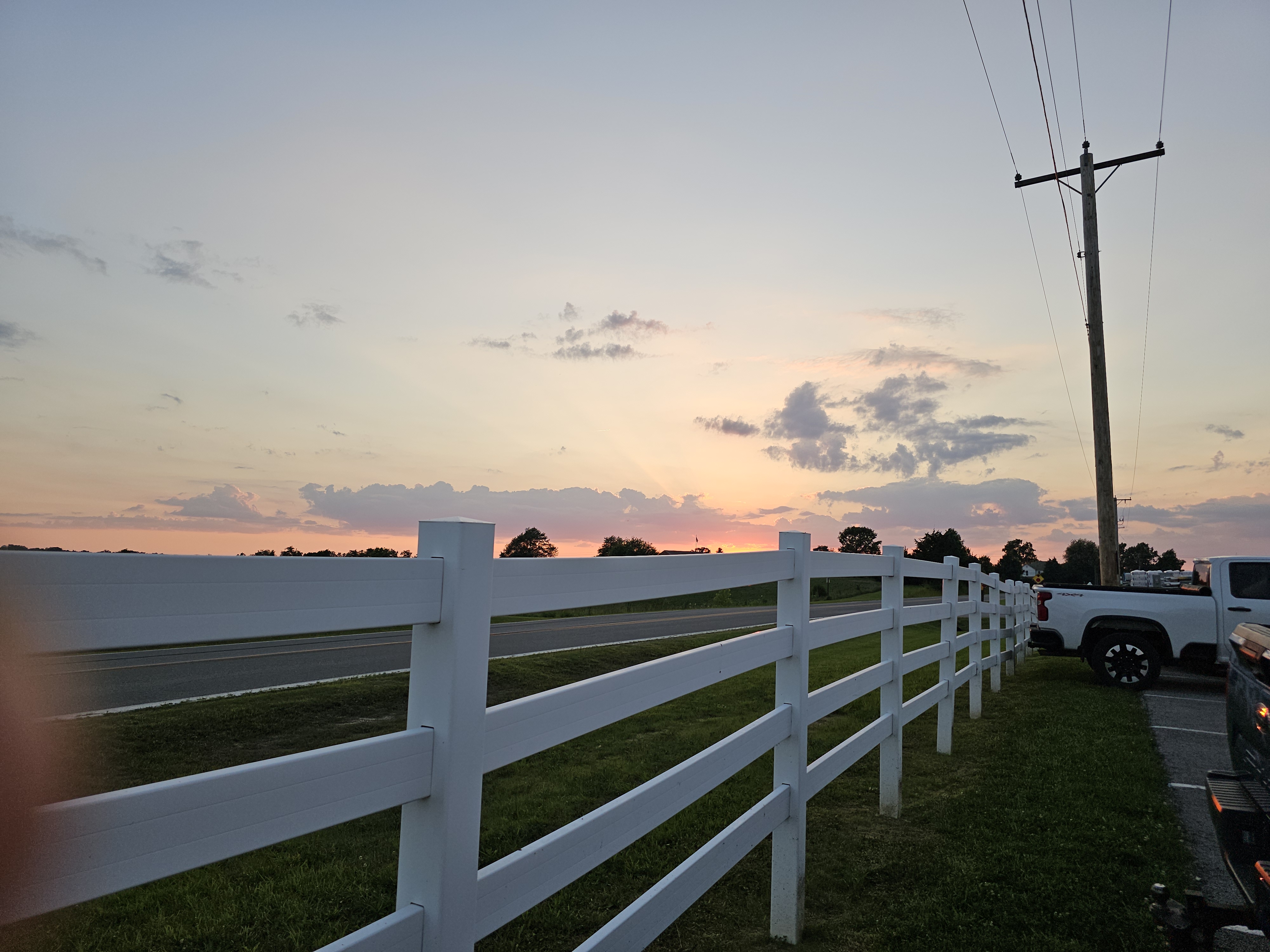
The mid west makes some BEAUTIFUL sunsets, even with my thumb in the way.

This boy was napping for before literally EVERY class. I had to brush shavings out of his tail SO many times!


The mounting blocks didn't get the message that this was a PONY show. 


Obligatory random stranger at the Ride Through coffee window.


Did I hop off Pete to go pet corgi's?? You know I did!


Monday, February 17, 2020

Support Systems

By Ange Bean

Wednesday I woke up unmotivated and feeling ‘heavy.’ I just wanted to curl up on the couch and play games on my phone. Luckily, Wednesday is my non-barn day (I'd love to call it a day off, but Wednesdays I generally attend the ever-growing office work pile), so I did. After about an hour of petting my cat, Gavin, crushing candy, and having my feet occasionally licked by Fritz, my dog, I was feeling recharged enough to do some correspondence and start on the office work.  

Since my last blog, there's been a lot of discussion around depression, burnout, and mental health. I'm very humbled my words have reached so many. Even those with less-positive responses, you are thinking about these things or you wouldn't take the time to reply.  

To those who know me in the real world and have reached out, I'm doing well these days. I couldn't have written my last blog when I was in my darkest time. I just didn't have enough perspective. Here's where my perspective has brought me.

Everyone who is bitten by the horse passion understands that horses are a high-emotion conduit. The joy of a great ride, or a soft nuzzle is truly wonderful. The heartache when your horse is injured is brutal.  With our emotions this exposed, of course we are going to experience periods of emotional unrest. Generally this shows up as some form of depression. 

Depression is an intimidating topic, especially as there are several types of depression, depression doesn’t always look the same, nor is it always of the same intensity.  Plus, since periodic mood oscillations are normal, often it's hard to know if the 'heavy' is actually depression.

For some people, their emotional oscillations run on the low side, or they get stuck in the bottom of the mood oscillation. The doctors title this ‘major depression’ or ‘persistent depressive disorder,’ depending on the exact symptoms.   Causes can be genetics, emotional, or physical trauma. Regardless of the cause, for people with these types of depression, finding the right medications, therapies, and lifestyle adjustments makes all the difference, and monitoring their emotional state is part of their life. 

Then there is what WebMD calls ‘situational depression.’  The brain experiences some trauma, either an ugly event, repetitive stress, or a hormone shift and the brain’s normal mood oscillations get affected. Sometimes, if the stressors go away, the brain goes back to normal. Sometimes, even if the stressors go away, the brain stays stuck in ‘injury’ mode. So the brain needs some help for a while, whether that be counseling, meds, herbs, lifestyle changes, or some combination. 

Then there's an occasional case of the blues.  Because of stress build up, or emotional trauma, or hormones, we feel a bit ‘not ourselves.’  Our emotional oscillation runs a little lower, or stays low a little longer than normal. Time and self care often bring things back on line. I jokingly call these small bouts of ‘heavy’ a ‘brain cold.’

The tricky part is knowing which you are experiencing. They all feel ‘heavy’ from the inside.  

My personal method for assessing is to ask myself a few questions:

  1. Did some event happen to trigger this?
  2. How long have I felt this way?
  3. How well am I taking care of myself?

If something has happened or I've felt ‘heavy’ for only a few days, I will treat it like any illness -- get enough rest, eat well, do things that recharge me.  Sometimes that ‘something’ is as simple as the end of a crazy show season and I'm run down. Sometimes it's losing Reine, my best dog, or Silhouette, my favorite horse. Sometimes it's the ups-and-downs of this industry getting to me. More important than the ‘something’ is my ability to heal.  If the ‘brain cold’ lasts too long, or gets worse, or I start having trouble functioning, then it's time to get help.  

The first place I go for help is my support system.  I have a few close friends I can count on when I need to talk, or just sit with me in my ‘brain cold.’ Sticking to my routines and maintaining good sleeping and eating habits goes a long way, but connection to people I trust has been the real key for me.  

I didn't have this a few years ago when things got really ugly. Sure, I had friends, but I was too guarded to have solid, trauma-surviving emotional connections.  In my mind, I could best meet the needs of my clients and staff by staying strong. Strong with lots of walls.

Breaking down those walls has not been easy, nor is it a finished job, but it is worth it. My circle of close friends is small. I appreciate every one of them. Without them, I could easily have spiraled into situational depression last year when I rearranged my business, or when I lost my mare and my dog. Thanks to my support system, a ‘heavy’ period didn’t become paralyzingly black and ulgy.  

Thankfully, Wednesday's ‘heavy’ start was not the beginning of a ‘brain cold,’ but most likely fatigue from Tuesday's long day. But if it was, I now have a plan for treating it.


Wednesday, January 15, 2020

Professional costs


I love my job. I really do. I get to spend my career following my passion.  But like most things, it comes at a cost. So many professionals have died lately, and more are opening up about their battles with depression, I feel the need to pull back the rug a little and try to show that cost.

Most recently, Teresa Butta died on New Year’s Eve.  We were acquaintances--we moved in the same circles, rode with the same instructor, attended the same clinics and shows, and were about the same age.  We had big dreams.  

I can’t look at her death, and look at my health breakdown two years ago, followed by necessary business and life changes, and not think “there, but for the grace of god, go I.”

The horse business is tough - everyone says that. But those words don’t even touch the surface.

Working in any highly competitive performance-based industry, be it athletics, the arts, academia, some corporate settings, is tough, because you are always, always trying to be the best. Not your best, but THE best, in order to survive. Any performance-based industry has a “what have you done lately?” mentality. Recent show results are much more important than awards won 20 years ago. 

Dressage riders are hard-wired with a type-A, perfectionistic, it’s-never-good-enough mindset--professionals even more so.    Even when we win, our score sheets detail areas to improve. The impossible standard of a “10” leaves every single one of us with a healthy dose of imposter syndrome. 

In the horse industry, we get the double-whammy of working in the service industry.  Unless a trainer is quite fortunate with sponsors or family money, the lights are paid by other people’s horses, other people’s dreams, other people’s goals.  Supporting client’s dreams and goals, often while we watch ours be sidelined by time, injury, or finances, is emotionally quite heavy. 

So heavy in fact that in the CBS article dated June 2016, entitled “These Jobs have the Highest Suicide Rate,”  agriculture/farming workers (which all of us who manage a farm are part of) ranked #1, and service industry workers ranked #19.

The finances in this job add to the pressure--this industry runs on insanely small profit margins.  The overhead is crazy high. Board generally breaks even, and owning a competition horse isn’t cheap.  Even when the long-term goal is sales, the carrying costs, promotion costs, and training time aren’t paid until the horse sells.   Most horse trainers are one colic surgery, one expensive truck repair, one lost training client away from sleepless nights and robbing Peter to pay Paul.  When clients drive up in late-model expensive cars and complain about the cost of a lesson, not getting bitter is an active choice, one that’s really hard to make at the end of a cold, wet, physically-tiring 12-hour day.  

We all walked into this career knowing we weren’t going to get rich, but we expected it to be fun.  Being close to burnout all the time isn’t fun, not even a little. 

Most often we are head trainers, or work alone, and the saying “it’s lonely at the top” is real.  When trainers do get the rare luxury of gathering with other pros, our competitive, perfectionistic nature makes it hard to let our guard down.  Talking about how many horses are in your program, how long your days are, how many days you’ve worked without a day off is a status symbol. Rarely do we ask each other if we are having fun, or what we do outside of the barn. We are so used to keeping up the veneer of success for our clients, that we can’t even let it down in front of our peers.  It’s really a wonder that more of us don’t crack.

In our late 20’s and early 30’s, these stressors are much easier to swallow. Big-tour horses still fill our dreams.  But as trainers near middle age, and you look at your meager 401k, and see USDF and USEF gearing so much funding and programs to the “young professional,” dreams of CDI gallops no longer have enough shine to pull you through the hard times.  

As trainers approach midlife, our priorities are often forced to shift.  The sacrifices we made in our 20’s and 30’s to make ends meet no longer seem worth it.  Because at the end of the day, no one asks how much we sacrificed or how hard we worked, only if we achieved our goal.

I have watched so many of my peers change their goals, and find other lines of work to have a more stable income source. They shift to part-time, or leave the industry all together.  All to achieve some form of stability, and hopefully a work-life balance. But when we’ve been our own boss most of our working career, in a field that most of the world doesn’t even know about, this transition time is really, really hard. 

I am saying all of this because knowledge builds empathy, and empathy builds connection.  And connection is a big key to handling stress.

Right now, with Teresa’s passing on our minds, my peers are discussing how to help each other.  But I think this discussion needs to be opened to the dressage community and friends of the dressage community.  We are all looking for concrete ways, big and small, to prevent the stresses of the job from creating stress fractures.  All ideas are welcome here, please comment below or on the Straight Forward Dressage Facebook page.


x


Thursday, December 13, 2018

Boundaries


Last week I had a training session on Capi that I really wasn’t happy with--I did achieve my throughness goal, but it wasn’t how I wanted it to feel.  I noted the tension and pressure, and decided to try a new plan the next day. I finished the rest of my day, taught my lessons, rode my other horses, chatted with staff and clients, then turned my phone on silent and had dinner with a friend.  The next day I got on with my new plan at the ready, but I didn't need it. Apparently Capi had gone back to his stall, thought about it, and he decided yesterday’s work was just fine. He happily agreed with me on this whole throughness idea. We had a much more relaxed, productive ride.

A year ago, I wouldn’t have been able to write that paragraph.  I would have spent the rest of the day, the entire evening, and the night riding and re-riding the training session, beating myself up for every part that I could have done differently. I would be sure it was entirely my fault, and not that Capi just needed a night to process. My self-criticizing would have so embedded itself in my thoughts that it would add a sharp snap to my conversations, because how dare you interrupt my self-flagellation?  By the time I got on the next day, I’d be convinced I should give up this dressage thing and go get an office job.

Last December was a turning point for me. I spent the better part of 2017 in emotional turmoil. By December, my body had enough.  I had an autoimmune reaction to a common antibiotic, one I've taken many times before, that nearly killed me. While I was literally tied in bed in the hospital, waiting to see if the drugs were going to work in time, I had time to think.  I came to a decision. I decided it was time to start living a full life.

Which was going to be a big shift.  Horses are a performance industry, steeped in the “what have you done for me lately” idea.  An industry where being busy is a status symbol. Dressage trainer’s coffee talk at shows is about how many horses are in your barn, how many students do you have at a show, how many clinics are you teaching, how many horses in training, etc.  Trainers brag about not having a day off for weeks on end. Then we wonder why we are burned out and impatient.

In a job where I willingly pay to be judged, it’s no surprise I was always judging myself and always coming up short. So I’d work more. Which made me tired and judgmental and hard on myself.  So I’d put in more hours. And so the cycle continued, until I felt like I was nothing more than my job.

I needed to learn to see myself as more than my professional identity. Sure, I have spent many years building and running a training business, but that is only part of who I am as a person. I needed to embrace the non-horse parts of myself as beautiful and worthy of my attention as well.  

They say “turn your passion into your job and you’ll never work a day in your life.” They say “work harder and you’ll achieve more.”  I think that’s bunk. If you work hard in a job you love, giving pieces of yourself every day with no time to refill, you’ll get burned out and bitter.

I had to do what I thought was impossible.  I let go of the guilt of taking time for myself.

Once that was acknowledged (but not fully conquered, that will take a lifetime), I started tracking my work hours, including the time spent at my desk.  The number was a bit staggering. I took a deep breath, and decided that some marketing and office work would just have to wait. This was, and still is, very difficult for me, leaving work for another day.  But I’m learning to do it.

I simplified some of my office work and delegated more.  I looked at all of SFD’s tasks, decided what was important to me and embraced those things.  Those things centered most around training, competition, and education. Then I looked at my staff, and handed them the other parts of my job, parts I thought they’d be good at.  Then I took another deep breath and trusted the people I had entrusted.

I decided it was time to learn to manage instead of just work harder.  I started having regular meetings with Carly, my stable manager, where we talked about things like how to do scheduling and how best to manage the day-to-day horse care.  When we needed to do some hiring, I passed that along to her as well, and she hired and trained a team of people that work really well together.

Of course there were, and still are, growing pains. Times when I learned that I needed to be more clear on expectations, times when the new responsibility didn’t work out, times when the ball was dropped. But because I’m not so overworked and anxious, I can deal with most of them more calmly and with less self judgement.  

As part of my focus shift, when Kelsey, my assistant trainer, enrolled in part 2 of the L this summer, I gave her as much support as I could. In past years, I would have kept the SFD calendar cranking along. But instead, I let go of SFD’s schooling shows and educational seminars for 2018 and went with Kelsey to give her moral support as her scribe for her L exam.  Which ended up being quite helpful when I got an invite to fill a last-minute spot in an ‘r’ program in August.

This is Chicago's Cloud Gate, picture taken from inside looking up

These fledgling boundaries created time for other things I love, things that make me feel like a more complete person. I went home to see family, then spent a day exploring in Chicago. I ran in a few 5ks.  I went to Austin City Limits music festival. I stole away to NYC for an overnight to eat, walk the Brooklyn bridge, and see a show. I went hiking. I took a lot of pictures of things at funny angles. I learned some cooking basics and had regular dinners with friends.


Guess what? No one left my barn because I took a weekend off.  Even my highly-judgy-brain has to admit that my changes didn’t ruin SFD.  My business is solvent. I ended up with just as many All-Breeds Champion and Reserve slots as previous years. I was high up in Horse of the Year in Freestyle and brought home ribbons from Kentucky again this year.  Timecenter says SFD is giving just as many lessons as last year. I’m still riding multiple horses daily.

The best part is I'm enjoying it more.  


Friday, November 16, 2018

Dreams and Purpose


When I talk to students about dressage progress, I always ask them a multiple-choice question. What is your goal -- is it (A) to see how far you can go, (B) to see how far this horse can go, or (C) to see how far you and this horse together can go?  The answer to this question helps me guide the rider to an appropriate plan.

For riders who want to see how far they can go, that often means a different mount at different stages of the journey.  For those who want to see how far the horse can go, that often means I spend more time in the saddle, and sometimes includes me showing the horse.  If the goal is to see how far the partnership can go, I often spend less time on their horse, but they may need to accept that their lovely, wonderful 15.3 ottb isn’t bound for the Pan Am games, and they may not earn their silver or gold medals, which is 100% ok, especially in the case of a “heart horse,” the horse that we love more than we love our goals.

I am a professional, which means I answer “A” in this question. But deep inside every professional rider is the kid who fell in love with ponies.  We are all looking for the “heart horse,” that one that gets under our skin, the one that breaks through our professional demeanor. The one that we keep on the books, even though a dressage trainer’s income does not really allow enough wiggle room for a sentimental horse. The one that gives wings to our goals and lets them fly to fulfill our dreams.  Because every dressage rider I know is a dreamer.

I bring this up because I’m going to tell the story of Venus, my mare.  She is not my “heart horse.”  But she is the horse I have.     

I have written a lot about Venus over the years.  I bought her as a 2-year-old.  At that point in my life, I had finished my working student time and was still freelance teaching.  I had a breeder I was talking with about starting and selling her young stock, so I had nice youngsters to ride, but I needed a horse to develop a bit further.  I wanted to show her in the at-that-point burgeoning Young Horse division to market my skills as a young horse trainer, and then eventually sell her. She was a good business decision—I did not expect to make a ton of profit on her, but she would give me the exposure I needed.

I knew Venus wasn’t going to be the easiest youngster when I met her. She had, and still has, a very powerful, athletic hind end.  She had, and thankfully no longer has, a nervous, untrusting look in her eye.  But I am a professional, and I wasn’t on a short time limit with her, so I thought I would be fine.

She took a lot of time to start, but in the long run, she became a trusting, reliable, rock-solid mare.  I did show her in the Young Horse divisions as a 4-and-5-year-old, where she did well.  Not horse-of-my-dreams well, but respectable.  Late in her 6-year-old year, she kicked a stone wall, bruising her left hind coffin joint.  Bone bruises take forever to heal, but she did fully recover.  Once she was sound and had a flying change, she had served her purpose in my program and was not the horse of my dreams, so I put her on the market.

She didn’t sell. 

So I took her off the market and developed her some more.  While she got stronger, I played quadrille and pas de deux with her.  One winter, I taught her to jump just for fun.  Her trot developed more cadence and her canter more jump.   She was getting fancy.

Meanwhile, my business had changed. I was teaching more.  Sales and young horses had become a much smaller part of my business. I had students earning their bronze and silver medals.  To support this business growth path, a horse that could get me more attention at the upper levels would be nice.  I began to think Venus could fill that purpose. Ok, I admit it, I began to dream a little, of neck sashes and shows that require invitations.  

So the next summer, I campaigned her at 3rd and 4th levels.  She did her first PSG at a schooling show.  She gave me some lovely, soft, high-scoring tests, usually in smaller, quieter venues.  In the big venues, she would get a little nervous, and tension would creep in and affect her scores. 

I signed her up for 4th level at Dressage at Devon. I knew the venue would be hard for her, so it was my litmus test of could she, with enough time, handle the bigger venues.  The weather was horrible.We had blowing rain and a cold, blustery wind.  These were definitely the hardest conditions Venus had shown under all season. She warmed up tight, but manageable. As we went in, the wind kicked up and the flags blew horizontal.  The plastic protecting the judge’s booths rattled.  She performed all of the movements, but was quite tense.  As we halted at x, I could feel her heart pounding she was so afraid. 

The score was underwhelming – not disastrous, but not her potential at all.   My emotional reaction was much stronger – I was overcome by guilt for putting my sweet mare through this.  I knew I could not ask her to fulfill the purpose of a horse to get me noticed.  It just wasn’t fair to her. I gave up on my dream and put her on the market again.

And again she didn’t sell.

I frankly, have no idea why she didn’t sell. I’ve sold tricky horses, I’ve sold green horses, I’ve sold hot, quick, small horses, I even sold a horse with a 2-beat walk and a tendency to rear (all fully disclosed, of course). Venus is quiet, has a great resume, is super consistent in her reactions, and is tolerant of riders sorting things out.  She’s probably the most solid horse I’ve ever had for sale, and the market just didn’t seem to want her.

I now had a horse on my grocery bill that wasn’t furthering my career and wasn’t my “heart horse.”  I enjoyed riding her, but as I answered “A” above, and she clearly wasn’t the horse for my dreams. I wasn’t sure exactly what I should do with her.  Her sale was to fund my next horse, so I was a bit stuck.

Then disaster struck. For no reason any vet can figure out (and believe me, multiple vets ran every test imaginable to try to figure it out), she developed laminitis. 

Nothing rips a horse lover’s heart out faster than watching a horse in pain. Dreams and purpose be damned, I just wanted her to not hurt. 

The x-rays showed a very, very minor rotation, but Venus’ laminitis was compounded by a series of abscesses that undermined her already-stressed lamina.  Resulting in a quarter crack and the heel area falling off. Literally.

My vet and my shoer assured me that she would, in time, be fine. Gradually, she became sound.  She had some creative, expensive shoes that she could not risk losing or her recovery would be set back months.  As turnout wasn’t an option, I moved her to the stall with a half door that overlooks the grooming area. Always a very friendly horse, she took to calling to everyone as they came to the barn.

One of my students fell in love with the pretty red mare.  She would bring Venus raisins and strawberry starburst jelly beans, and hand graze her whenever she was at the barn. Venus would nicker when my student got out of her car.  As Venus’ feet became more comfortable, my student started to ride her a little.  My student was, at that time, a first level rider. The power and sensitivity of a competing-4th level mare would have been a bit too much for her, but after being sick for so long, Venus was nicely tuned down. 

As Venus became stronger and more comfortable, my student became more confident and skilled. She began half-leasing Venus.  I was worried at first, as my student had a bit of canter anxiety, and Venus has a large canter stride, but the trust she had in Venus helped her over her nervousness. 

Over the months, I watched my student slowly develop a stronger, more independent seat. I’ve watched her learn to half halt and half pass with authority.  I’ve watched Venus thrive under the loving care of her own AA.  I’ve watched my student begin to dream, and her dreams are ones that Venus can make come true.

On her non-leased days, Venus sometimes helps me teach or I hop on her.  Ironically, when I ride her now, without the pressure of my goals, we find each other more enjoyable.  I am more creative with her, and experiment with training ideas, ideas I wouldn’t have tried if she was headed for a centerline.  But I have no goals of taking her in front of a judge, so I’m willing to play more, and when she gets tense, instead of feeling the need to have her work through it, I’m more inclined to leave that challenge for another day and go for a stroll the hill.  She has become my mental-unwind horse.

My mare again has a purpose. 


Friday, October 19, 2018

Catching Up


My blog has been silent for a long time.  Other than some recycled work, I haven't posted in over a year.  I went through a rough year, probably the hardest of my life, in 2017.  Writing has always been an outlet for me.  Although I wrote prolifically in my journal, my journey was personal.  Plus telling a story while you are in the midst of it, well, that just isn’t the time.  Perspective is important in all narrative.  But some parts I’m ready to share, if just to bring things up-to-speed for some future blog ideas I have cooking.

Blogging as a performance- based business owner puts me a bit at odds.  My writing mentors have always rewarded honest, real, gritty prose.   Business marketing tells me to fill the internet with fun, fluffy, positive things.  As a culture, we tend to gloss over emotionally uncomfortable topics, pretending the rains never happen.  But life isn't always nice and pretty, and growth is often uncomfortable, messy, and painful.  Change rarely comes from comfort, and growth often has a price.  The beautiful thing about life is often when the struggles are mounting, there’s a bright spot somewhere.  I’m sure this comes as no surprise, but horses are my bright spot.

If you follow Straight Forward Dressage or know me on Facebook, you’ll know the 2017 show season was a good one.  Secret had a solid PSG/I-1 season, earning a handful of the scores I need to advance in my judge’s training and competed in her first CDI. Capi ended up winning Region 8, BLMS, and stood 5th at Nationals with his second level Peter Pan freestyle.  Sling was 3rd level champion at the DVCTA championship show.  In the barn, my students earned a large handful of All-breeds awards, a regional reserve champion, a 10th place finish in Kentucky, and a freshly minted bronze medal. My para-equestrian student was 2nd at the Para national championship in Tryon (more on that in a later blog, I have GREAT photos) and won USDF Grade III Para Rider of the year.  Last year, this consistency was really reassuring.  Even with the hurricane whirling around me, these horses were the calm eye of the storm.

This year the horses continue to shine brightly.  Secret gave me the rest of my PSG/I-1 scores plus a few to spare, collecting many blue ribbons along the way.  Capi had an amazing year with many 3rd level and freestyle scores in the 70’s.  He had some very-normal-horse moments this last weekend at Regionals (I just don’t understand why they have gatekeepers in championship classes and no other national classes, but I digress...) that put him mid pack in most of his classes, with the exception of his 2nd level freestyle, which he placed   well enough to earn him another trip to KY this year.  Sling went home to his young rider to teach her FEI dressage.  As a trainer, seeing a long-term training horse go home and do what you trained it to do is really rewarding.

My personal horses were not so comforting—I’ll spare you all the details. In 2017 and even into this year, I have been reminded that it isn’t the long hours, the work, or the low pay that exhausts professionals. It’s the heartbreak.

With all the goings-on in the second half of last year, in addition to my blog, my riding education was put on hold. I hit an occasional lesson here or there, but wasn’t able to keep my education in the forefront like I usually do.  This year I have been able to amend this.  Most of my education budget and time have gone to judge education.  In the spring I audited Part 1 A and B of the L program, and I’m really glad I did, as I received a last-minute invite to a small r program in August.  I also played scribe for the L Part 2 while my assistant trainer, Kelsey, prepared for, took, and then passed her exam. 

In addition to educating my judge’s eye, I’ve been back in lessons regularly again. Secret has stayed home from the show circuit since June, and with Scott Hassler’s help, she is making huge strides on the big jump to Grand Prix.  Every day she reminds me that, in this dressage game, heart is more important than breeding.  Jeanne McDonald has seen Capi and I as regularly as our messy schedules allow, contributing hugely to his show ring consistency this year.

I’m super excited for the upcoming winter.  Instead of freezing up here in PA, I’m headed to Fl for 3 months of training.  I’m sharing a facility with Sara Schmitt, where I’ll get her eyes on my riding daily, as well as access to all of the other wonderful instructors who winter with the Palm trees.  I haven’t had this long of an intensive since I was a working student.  I’ve gone to FL to warm up and get inspired for bits of time each winter, and last year even took a student down for 2 weeks to compete. But this will be the first time I will be able to be fully immersed in my own education.  With Secret schooling the GP and Capi knocking on the door of PSG, it’s time.  I’ll keep you all well apprised of my progress.

Although I’ve had the opportunity to go to FL in the past, I’ve resisted, because FL can be an amazing, inspiring dressage immersion, or it can be a sunny place to feel poor and inadequate.   Plus as I’m not taking my entire barn south, I’ve needed the right people in the right places at home.  Now I do.  I have a solid stable manager in Carly, who I trust completely with the care of not only the horses but their humans.  I have newly-minted L grad Kelsey who has matured into a lovely instructor and my eyes-on-the-ground at home.  Cheryle, who has helped keep my office stuff organized for years, has taken on additional responsibilities as well.  These women, just by being who they are and doing their jobs well, are providing the springboard to my dreams. 

This blog started out as an update-my-readers bit, so I could jump into my dressage story line where it is today, but as writing often does, it took its own path.  The more I write, the more my emotions turn to gratitude to my support system that has stayed with me to the other side of my rough year.  Shelley, Linda, and Wendy are amazing owners who have trusted me with their horses.  My trainers have been amazing to help me get as much education as possible around my nutty happenings.  My barn family, both staff and clients, have been there for me every step of the way, even when the steps were messy and confusing to them.  Because of all of you, my heart is full, and my future looks bright.


x